The School Fashion Debate Has Overlooked Its Measurable Mental Consequences

School uniforms are among the most visible features of institutional education, yet their psychological consequences have received limited empirical attention. A new study finds that the visual design logic of a uniform — whether it signals individuality, shared values or physical comfort — shapes students' hope, resilience and confidence in distinct and measurable ways. The research, conducted across China with 210 participants, uses structural modelling to map how each aesthetic orientation produces its effects.

Long Story, Cut Short
  • A new study finds that how a school uniform looks—not just that it exists—produces measurable differences in students' psychological development and resilience.
  • Uniforms perceived as reflecting collective values such as inclusivity and sustainability strengthen students' sense of belonging, which in turn builds hope, optimism and self-efficacy.
  • Comfort and practicality in uniform design directly boost psychological capital, bypassing identity altogether, making functional aesthetics the strongest single driver in the study.
School uniforms occupy a curious institutional position—simultaneously erasing individual difference and, according to new research, shaping the psychological resources students develop during some of their most formative years.
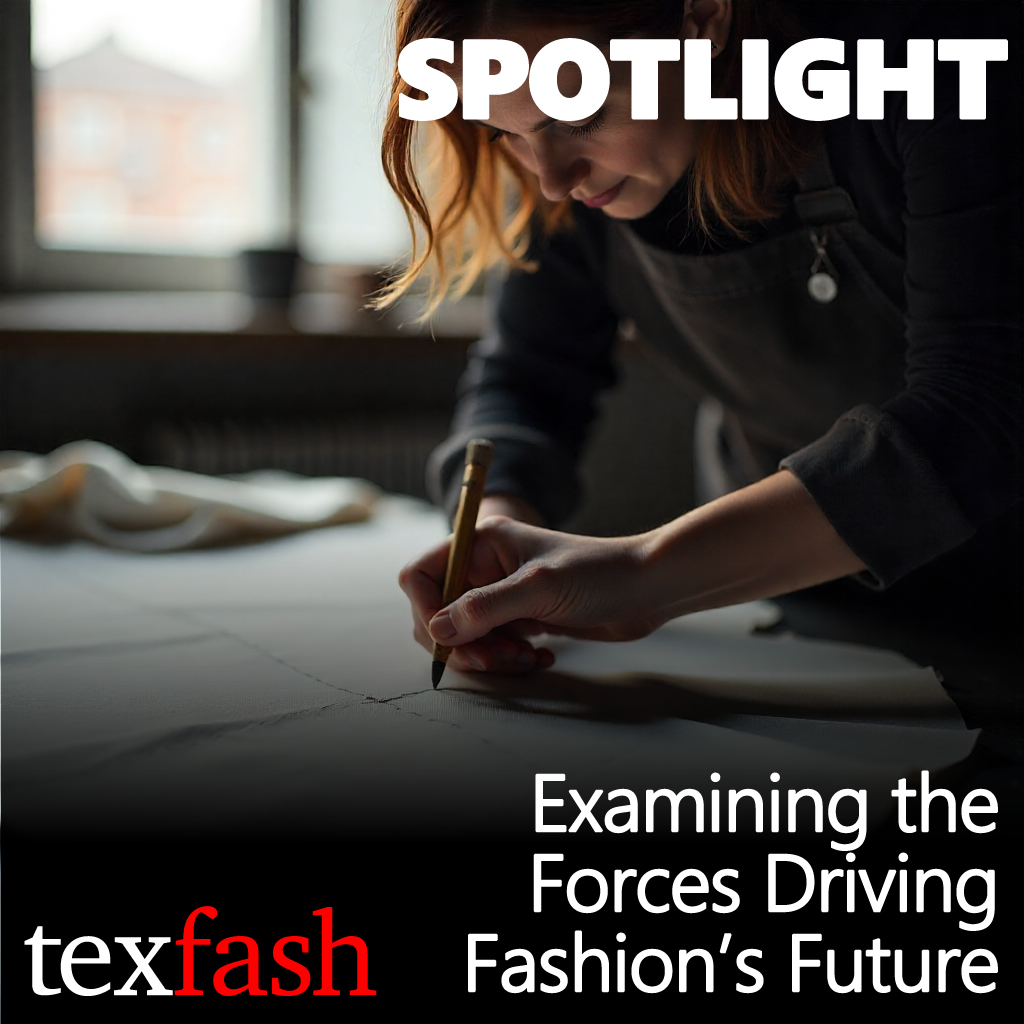
Uniform Flaw School uniforms occupy a curious institutional position—simultaneously erasing individual difference and, according to new research, shaping the psychological resources students develop during some of their most formative years. AI-Generated / Reve

Every morning, millions of students pull on the same jacket, the same trousers, the same shoes as everyone else in their school. This is true practically the world over. The uniform is meant to erase difference—to signal belonging, impose order, reduce the visibility of inequality. What it is rarely asked to do is build hope, strengthen resilience or reinforce a student's belief in their own abilities. But, new research suggests it may be doing exactly that, whether anyone designed it to or not.

The debate around school uniforms has long been fought on familiar ground: discipline, equality, safety, cost. Administrators emphasise their merits in policy documents, parents dispute them at school board meetings, and students endure them all through. What has received far less attention as debates have raged on is the psychological layer beneath the institutional surface—the possibility that the aesthetic character of a uniform i.e. the way it looks and what it appears to signal—may be shaping something measurable in the students who wear it.

That measurable something has a name in positive psychology: psychological capital. It is not a personality trait but a developmental state, defined by four components—hope, resilience, optimism and self-efficacy. Unlike fixed personality traits, psychological capital can be cultivated—shaped, in principle, by the conditions a student inhabits, including the clothes they are required to wear every day.

Adolescence makes this question particularly pointed. It is the period during which aesthetic awareness sharpens, self-identity begins to form, and clothing shifts from mere covering to social signal. When the standardised uniform system conflicts with those emerging individual needs, the friction is not merely sartorial—it may carry psychological consequences that no one has formally measured.

The new arguments come from a recent study 'From uniform to belonging: how fashion imagery of school uniforms shapes students' psychological capital via social identification', authored by Yifan Di and Lixian Liu of the School of Fashion Design and Engineering, Zhejiang Sci-Tech University, and Yudian Zhang of the School of Art and Design at the same institution. The paper was published earlier this month in Frontiers in Psychology.

Working with 210 participants across China, the researchers presented standardised uniform images and asked participants to rate them against 15 affective descriptors drawn from the WGSN 2026–2027 macro trend reports. Principal Component Analysis reduced those descriptors to three distinct aesthetic orientations. Partial Least Squares Structural Equation Modelling then tested how each orientation related to psychological capital—and through which psychological pathway.

The results are not simple. Not every quality that makes a uniform more fashionable strengthens belonging. Some design cues build group identity. Others strengthen students individually, without identity playing any role at all. And in at least one case, the aesthetic logic that boosts individual confidence appears to work against the collective signal a uniform is classically supposed to send.

Three Hidden Languages of Design

The study's first challenge was measurement. "Fashion imagery" is not a variable that arrives pre-packaged for statistical analysis. To make it tractable, the researchers built a vocabulary from scratch.

Drawing on the WGSN 2026–2027 macro trend reports—a professional trend forecasting source—they extracted affective adjectives and screened them for semantic relevance, arriving at a final set of 15 descriptors. These included terms as varied as "individualistic," "sustainable," "comfortable," "nostalgic" and "technological." Participants then rated standardised uniform images against each descriptor.

Crucially, the three aesthetic dimensions that emerged were not categories the researchers decided upon in advance. They were statistically derived through Principal Component Analysis—pulled from the data by the weight of participant responses, not imposed upon it by the design team.

The first dimension to emerge was individuality-oriented aesthetics, grouping the descriptors "fashionable," "creative," "individualistic," "energetic" and "playful." This orientation reads as expressive variation and stylistic vitality—dynamic colour contrasts, unconventional detailing, silhouettes that deviate slightly from strict uniformity. The signal being read here is one of selfhood. A uniform perceived through this lens speaks to the wearer's sense of individuality within an otherwise constrained context.

The empirical result was unambiguous: individuality-oriented aesthetics had a significant direct positive effect on psychological capital. What they did not do was strengthen social identification. The pathway was entirely self-focused. Individuality boosts confidence and psychological strength—but it does not deepen a student's sense of belonging to the group.

The second dimension, responsibility-oriented aesthetics, gathered a noticeably different set of descriptors: "inclusive," "sustainable," "socially responsible," "technological" and "nostalgic." Where individuality speaks to the self, this orientation encodes something collective. Students perceiving a uniform through this lens read it as a carrier of shared ethics, institutional continuity and social responsibility made visible.

What drives this dimension is recognition rather than expression—the sense that the uniform reflects values the wearer holds in common with others. That recognition significantly strengthened social identification. The effect on psychological capital was indirect, mediated entirely by the belonging that responsibility-oriented design cues triggered. Visible signals of shared values, not stylistic appeal, are what activate that sense of connection.

The third dimension, function-oriented aesthetics, grouped "comfortable," "safe," "practical," "durable" and "healthy." This is the least symbolic of the three orientations. Where individuality speaks to identity and responsibility speaks to collective values, function speaks to the body—to physical ease, environmental fit and the sense that a uniform supports rather than constrains daily life.

The result was striking. Function-oriented aesthetics produced the strongest direct positive effect on psychological capital of all three dimensions—and did so without operating through social identification at all. Comfort and physical security strengthen resilience and self-efficacy through a pathway that requires no identity activation whatsoever.

What the three dimensions reveal, taken together, is a structural divide the data made visible rather than the researchers designed. Uniform aesthetics operate across three distinct psychological levels—expressive, collective-symbolic and embodied-functional. They are not interchangeable. Each activates a different mechanism—and none of those mechanisms can substitute for another.

Inside the Study
  • Researchers collected 15 affective descriptors from WGSN 2026–2027 macro trend reports to measure uniform fashion imagery.
  • 210 participants across China rated standardised uniform images, with sampling stratified by region, setting and academic stage.
  • Principal Component Analysis extracted three statistically derived aesthetic orientations from participant responses, not researcher-imposed categories.
  • The structural model explained 41.5% of variance in psychological capital, indicating moderate to strong predictive power.
  • Social identification was operationalised as a single-item construct, capturing participants' overall sense of school affiliation from uniform imagery.
What the Numbers Show
  • Function-oriented aesthetics produced the strongest direct effect on psychological capital, surpassing both individuality and responsibility orientations.
  • Responsibility-oriented aesthetics drove 26% of the variance in social identification, with individuality showing no significant effect on belonging.
  • The mediated pathway—responsibility leading to social identification, then to psychological capital—was statistically significant at p = 0.038.
  • Individuality-oriented aesthetics showed a direct coefficient of 0.332, contributing independently to psychological capital without activating group identity.
  • Function-oriented aesthetics registered a direct coefficient of 0.414, the highest in the model, operating entirely outside the social identification pathway.

Belonging, Confidence and the Design Gap

The structural modelling phase of the study moved the analysis from description to causation—or as close to causation as a cross-sectional design permits. Three pathways were tested, and they tell three different stories.

Responsibility-oriented aesthetics did not strengthen psychological capital directly. Instead, they did so through social identification. Students who perceived collective-value cues in a uniform—inclusivity, sustainability, social responsibility—reported stronger belonging, and that belonging then translated into greater psychological resources. The mediation was statistically significant. This is not a minor methodological distinction. It means the mechanism matters: strip out the belonging, and the psychological benefit of responsibility-oriented aesthetics largely disappears.

The other two pathways were more direct. Individuality-oriented aesthetics predicted psychological capital without social identification playing any mediating role. The effect was self-focused—operating through personal expression and self-related psychological processes. Function-oriented aesthetics followed the same direct logic, but through a different mechanism: embodied experience rather than self-expression, grounded in comfort, safety and daily physical ease.

The model's numbers on social identification are worth pausing on. The three aesthetic dimensions together accounted for 26% of the variance in social identification—a moderate but meaningful figure, given that social identification in school settings is shaped by a wide range of factors well beyond clothing. Responsibility-oriented aesthetics were the primary driver of that variance. Individuality-oriented aesthetics, by contrast, had no significant effect on social identification at all.

That asymmetry points to a tension the study frames through Optimal Distinctiveness Theory. Adolescents are understood to navigate two competing psychological needs simultaneously: the need to belong and the need to feel distinct. In institutional settings, where conformity is structurally enforced, aesthetic cues that strongly emphasise individuality may satisfy the need for self-expression—but they do so at a cost. By foregrounding personal uniqueness, they may dilute the uniform's function as a prototypical group symbol, weakening its capacity to activate the social identification that belonging requires. A more fashionable uniform is not, on this evidence, necessarily a more unifying one.

The numbers sharpen the picture considerably. The model explained 41.5% of the variance in psychological capital—a figure the authors describe as indicating moderate to strong predictive power. Within that, function-oriented aesthetics carried the strongest direct coefficient. Individuality contributed a significant but independent effect. Responsibility worked indirectly, through the belonging pathway. Each dimension contributed, but through a distinct route.

Uniform design, in short, cannot be treated as a single aesthetic decision with a single psychological consequence. Adjust the design logic and you shift the psychological pathway. Strengthen the functional cues and you build resilience directly. Lean into collective-value signals and you activate belonging first. Emphasise individual expression and you boost confidence—but you may be trading something in the process.

The Question No One Is Asking

School uniforms are routinely treated as administrative instruments—tools of order, equality and institutional control. This study suggests they are doing something else entirely: quietly shaping the psychological resources students build during the years that matter most.

Design cues that signal shared values strengthen belonging. Comfort builds resilience directly. Individuality boosts confidence, but not collective identity.

If uniforms are mandatory—and in most school systems, they are—the question is no longer whether they shape students' psychological development. It is how deliberately that influence is designed.

Adolescence is the period during which clothing first becomes a vehicle for identity. When institutional dress codes intersect with that emerging need for self-definition, the psychological stakes may be considerably higher than previously understood.
Adolescence is the period during which clothing first becomes a vehicle for identity. When institutional dress codes intersect with that emerging need for self-definition, the psychological stakes may be considerably higher than previously understood. AI-Generated / Reve

Subir Ghosh

SUBIR GHOSH is a Kolkata-based independent journalist-writer-researcher who writes about environment, corruption, crony capitalism, conflict, wildlife, and cinema. He is the author of two books, and has co-authored two more with others. He writes, edits, reports and designs. He is also a professionally trained and qualified photographer.


Dated posted: 26 February 2026 Last modified: 26 February 2026