Commercial Garments Patterned for Standing Bodies; Wheelchair Users Pay the Price

The ready-to-wear industry assumes vertical torsos, straight legs, and symmetrical weight distribution. Wheelchair users experience bunching, gaping, and constriction when seated for extended periods. Research published in 2024 identifies seated body geometry differences as the primary barrier to functional fit. Mainstream adaptive launches have proliferated, but most address closures, not core pattern engineering.

Long Story, Cut Short
  • Standard garment patterns assume upright posture, creating pressure points, fabric pooling, and circulation issues for wheelchair users seated for extended periods.
  • Hip flexion at 90 degrees redistributes soft tissue and alters skeletal alignment, requiring purpose-built pattern blocks rather than adaptations from standing templates.
  • Mainstream adaptive launches focus on fastening systems, but scaling remains constrained by production economics and the absence of seated-fit pattern libraries.
The question is not whether adaptive fashion exists, but whether its underlying geometry has been rebuilt for bodies that do not conform to standing templates used industrywide.
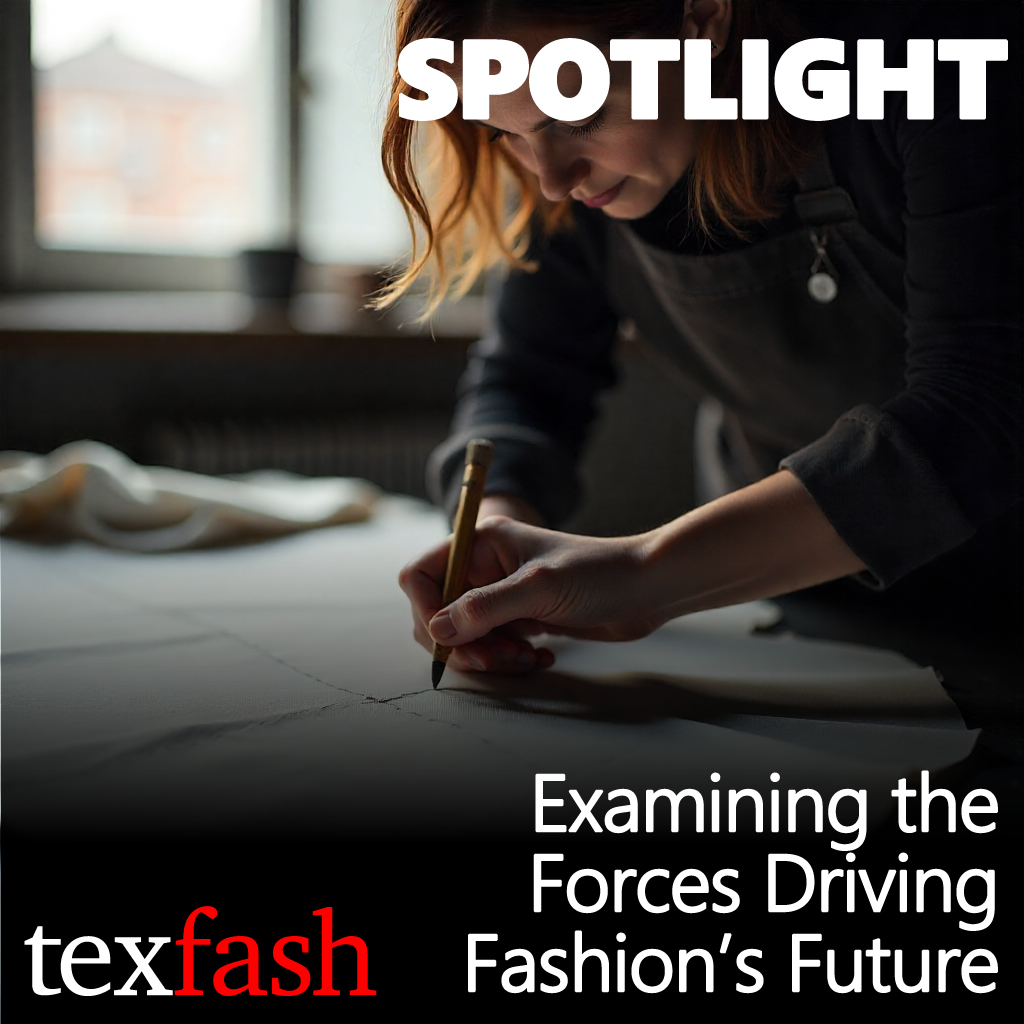
Body Geometry The question is not whether adaptive fashion exists, but whether its underlying geometry has been rebuilt for bodies that do not conform to standing templates used industrywide. AI-Generated / Reve

Most commercial garments are patterned for upright, ambulatory bodies. For wheelchair users, this produces pressure points, fabric pooling, exposure at the back rise, and friction injuries. Mainstream adaptive launches in recent years signal awareness, but research shows the issue is structural: pattern logic must change.

Standard pattern blocks assume a vertical torso, straight legs, and symmetrical weight distribution. A 2024 systematic review published in the International Journal of Consumer Studies identifies seated body geometry differences as the core issue. When the body is seated, hip flexion alters rise depth, shifts hem length, and redistributes seam stress. What fits while standing creates bunching, gaping, or constriction when seated for extended periods.

The consequences extend beyond discomfort. Pressure distribution studies link clothing bunching to skin injury risk, particularly over bony prominences like the sacrum and ischial tuberosities. Fabrics that gather under the thighs can restrict circulation; waistbands that ride down expose skin; trouser hems that pool create trip hazards during transfers. These are not styling problems. They are biomechanical mismatches between garment structure and body position.

The adaptive apparel market has grown rapidly. In September 2023, Kohl's expanded its adaptive merchandise assortment with products designed in partnership with Gamut Management. Victoria's Secret debuted adaptive intimates with magnetic closures. Target, Marks & Spencer, and Tommy Hilfiger have launched dedicated lines. Yet most offerings focus on fastening systems — magnetic buttons, side zippers, elastic waistbands — rather than re-engineering the underlying pattern itself. Ease of dressing matters, but it does not solve the fit problem inherent in seated posture.

The structural question remains: how should a trouser block differ when the wearer's hips are permanently flexed at 90 degrees? How does a jacket's back length change when the spine curves differently? How should sleeve pitch adjust for arm position on wheelchair rims? The 2024 review frames this as a pattern engineering challenge, not merely a materials or closure innovation. It is a call to rethink the foundational geometry of garment construction for bodies that do not conform to the standing template upon which the entire ready-to-wear industry is built.

Biomechanics of Seated Fit

The 2024 systematic review published in the International Journal of Consumer Studies identifies seated body geometry differences as the primary barrier to functional fit for wheelchair users. Hip flexion at 90 degrees redistributes soft tissue, alters skeletal alignment, and changes the body's contact surface with fabric. Standard garment patterns do not account for these shifts.

In seated posture, hip flexion shortens the front rise and lengthens the back rise. The curve of the spine changes, moving the shoulder blades closer together and altering jacket back width. Hem lengths shift: trouser fronts ride up, exposing the ankle; trouser backs pool beneath the thighs. A 2021 study using 3D body scanning compared standing and seated postures in females and found that lower-body circumferences increased during seated flexion due to redistribution of muscle and adipose tissue around the joints. The geometry of the body in seated posture is not simply a compressed version of standing posture. It is structurally different.

Seam stress also redistributes. Side seams pull forward, placing tension where the fabric crosses the widest part of the hip. Inseams shift, creating friction along the inner thigh. Waistbands designed for upright torsos slide down when the pelvis tilts posteriorly in seated position, exposing the lower back. Armholes designed for arms hanging vertically do not accommodate the forward shoulder position required for propelling manual wheelchairs. These are not minor adjustments. They are fundamental incompatibilities between pattern construction and body position.

Research published in 2023 on pressure ulcer prevention links clothing bunching to skin injury risk. Fabrics that gather under bony prominences — the sacrum, ischial tuberosities, and greater trochanters — create localised pressure and shear forces that can damage tissue. Hospital-acquired pressure ulcers cost the United States health system $26.8 billion annually, with over 50% of the cost attributed to treating Stage 3 and 4 pressure injuries. For wheelchair users, clothing is not a passive layer. It is an interface between skin and seating surface, and poor fit increases injury risk.

Prolonged sitting also affects vascular health. Hip and knee flexion during seated posture causes arterial bending and low blood flow to the lower extremities, which is disadvantageous for leg vascular health. Tight waistbands, restrictive seams, or bunched fabric exacerbate circulation issues. The biomechanics of seated posture require garments that accommodate flexion without constriction, distribute pressure evenly, and allow tissue to move naturally against the wheelchair seat. Pattern blocks must be redrawn with seated measurements as the baseline, not adaptations from standing blocks.

The structural question remains: how should a trouser block differ when the wearer's hips are permanently flexed at 90 degrees? How does a jacket's back length change when the spine curves differently? How should sleeve pitch adjust for arm position on wheelchair rims? The 2024 review frames this as a pattern engineering challenge, not merely a materials or closure innovation.

Commercial Signals, Manufacturing Opportunity

Mainstream brands have expanded into adaptive apparel in recent years. In September 2023, Kohl's expanded its adaptive merchandise assortment with products designed in partnership with Gamut Management, a consulting firm specialising in disability talent. Victoria's Secret launched adaptive intimates with magnetic closures. Target's Cat & Jack line has included adaptive children's clothing since 2017, and Tommy Hilfiger announced in 2021 that it would increase its Tommy Adaptive collections to two per year and expand availability worldwide, having already added Europe, Australia and Japan. These launches signal commercial viability, but they also expose structural challenges in production.

Distribution remains fragmented. Online channels dominate the adaptive clothing market by offering convenience, accessibility, and a wide range of products, enabling individuals with mobility challenges to explore and purchase adaptive apparel from home. Yet physical retail still presents barriers. Research examining how wheelchair users navigate physical retail landscapes identifies environmental barriers including narrow aisles, compact spaces between racks, and lack of accessible dressing rooms. 

In 2023, over 30% of department stores in North America dedicated shelf space or floor displays to adaptive fashion, up from 18% in 2022, but visibility does not equal accessibility. For wheelchair users, trying on seated-fit garments in standing-oriented fitting rooms defeats the purpose.

Adaptive clothing requires smaller production runs and greater design variation than standard apparel. Achieving consistency in sizing and fit across different adaptive clothing lines remains a persistent challenge for manufacturers, as variations in body proportions, mobility limitations, and personal preferences necessitate a more nuanced approach to sizing. 

Standard grading rules do not apply. A size medium for a wheelchair user cannot simply be scaled from a standing medium block. Each garment type demands purpose-built patterns, which increases design labour and complicates inventory management. The global adaptive clothing market was valued at $1.34 billion in 2023 and is projected to reach $2.41 billion by 2032, but growth remains constrained by production economics.

The issue is not demand. Seventy-five per cent of consumers who buy Tommy Hilfiger's adaptive range are new to Tommy.com, and those that do spend 4.8 times more than the average customer. The constraint is supply-side fragmentation. Brands must balance investment in pattern development against uncertain sales volumes for each SKU. This creates reluctance to expand adaptive lines beyond pilot offerings, even when consumer interest exists.

India's garment manufacturing sector presents a potential solution. The country already supplies pattern engineering and technical services to global brands, and manufacturers increasingly turned to 3D knitting, AI-based fabric pattern recognition, and robotic cutting systems in 2024 to streamline production processes. Indian factories that once waited weeks for couriered prototypes now share three-dimensional files with buyers in hours, and product-development cycles have fallen from months to days. 

If Indian manufacturers invest in adaptive pattern libraries — pre-engineered blocks for seated bodies across multiple garment categories — they could offer brands a faster, lower-risk route to scaled adaptive production. The value proposition is technical expertise, not just low-cost labour. Brands need partners who understand biomechanical fit requirements and can execute small-batch production without prohibitive minimums. India's digitally connected factories, combined with established expertise in pattern grading and technical pack development, position the sector to capture this emerging segment as export value-add.

The Biomechanical Mismatch
  • Hip flexion at 90 degrees shortens the front rise and lengthens the back, causing waistbands to slide and trouser hems to pool.
  • 3D body scanning studies show lower-body circumferences increase during seated flexion due to redistribution of muscle and adipose tissue around joints.
  • Seam stress redistributes in seated posture, placing tension where fabric crosses the widest part of the hip and creating friction along inseams.
  • Hospital-acquired pressure ulcers cost the United States health system $26.8 billion annually, with clothing bunching contributing to localised shear forces.
  • Prolonged sitting causes arterial bending and low blood flow to the lower extremities, which tight waistbands and restrictive seams can exacerbate further.
Markets, Production Barriers
  • The global adaptive clothing market was valued at $1.34 billion in 2023 and is projected to reach $2.41 billion by 2032.
  • Seventy-five per cent of consumers who buy Tommy Hilfiger's adaptive range are new to Tommy.com and spend 4.8 times more than average.
  • Over 30% of department stores in North America dedicated shelf space to adaptive fashion in 2023, up from 18% the previous year.
  • Standard grading rules do not apply to adaptive patterns, as each garment type demands purpose-built blocks tailored to seated body proportions.
  • Indian manufacturers using 3D knitting and AI-based pattern recognition in 2024 position the sector to offer adaptive pattern libraries as export services.

Richa Bansal

RICHA BANSAL has more than 30 years of media industry experience, of which the last 20 years have been with leading fashion magazines in both B2B and B2C domains. Her areas of interest are traditional textiles and fabrics, retail operations, case studies, branding stories, and interview-driven features.


Dated posted: 5 May 2025 Last modified: 5 May 2025